
As I think about legacy, my mind goes to the question: How will you be remembered? You’ll be gone and unable to give that answer. The answer will come from others who look back on your life. Answers to that question are usually short—a sentence, not a paragraph. People tend to boil it down to the main highlight or two that best sums you up. That brief statement is how history will remember you.
I began pondering this question after listening to a podcast from my best friend, Talmage Boston. His podcast series is called “Cross-Examining History.” I encourage you to click on this LINK to subscribe. Talmage interviews a lot of famous authors who use the lens of history to teach us valuable life lessons. Episode 88 is an interview with Mark Updegrove about his latest book, Make Your Mark: Lessons in Character from Seven Presidents. The book opens by quoting the long-time Congresswoman and playwright Claire Booth Luce who said great people are usually remembered in history by one sentence. Luce would notoriously go up to people and ask, “So what is your sentence?” Updegrove reports that John F. Kennedy got so tired of her question that he would avoid her at parties.
But Luce got me thinking. What’s my sentence going to be? I’ll warn you; this is hard. It’s easier to write an essay than one single sentence. Luce offered examples: Lincoln freed the slaves; FDR got us through the Depression and won a World War. But if you haven’t abolished slavery, ended the Great Depression, or won World War II, what is your stand-out legacy?
For more examples, I’ll turn to Updegrove’s one-sentence verdicts for the seven presidents featured in his book, each of whom he personally interviewed:
- Gerald Ford always intended to do the right thing for the country, which he believed he was doing when he pardoned Nixon.
- Jimmy Carter was a born-again Christian who wanted to use politics to do good in the world.
- Ronald Reagan was known for his optimism, encouraging down-hearted Americans to once again believe in themselves and in our country.
- George HW Bush was a man of humility whose goal was to make America a kinder, gentler nation.
- Bill Clinton is a man of resilience whom people continued to love even in the face of scandal.
- George W. Bush is known for his expert handling of the 9-11 attack and keeping America safe for the balance of his presidency.
- Barack Obama is known for the grace he portrayed in the face of racism and bigotry.
Do those examples help you narrow down your one sentence? I struggled with mine. Rather than flying solo, I debated the topic with my wife Laurie. We did her sentence first. It was instant and obvious to both of us: Laurie Blum is a nurturer, known for nurturing everyone who comes into her life.
For Marvin, the word that came to both Laurie and me was “family.” Caring for my family is at the forefront of everything I do. Laurie expanded my legacy to reflect my life’s work of helping families on a larger scale, not just my immediate family. Marvin Blum’s life’s work, both in and out of his law practice, is to help families build a legacy and thrive.
I then started to work on Talmage, who uses his thirst for knowledge to stimulate himself and others, always milking the most out of life. When I ran this by Talmage, he recalled how our friend Bill Parrish described him: “Talmage Boston brings people together.” Indeed, in one word, Talmage is a “connector.”
Then Talmage took up the task of a one-sentence recap of how he believes I made my mark: “Marvin Blum brings warmth and wisdom to the world every day of his life.” What a gift it is to hear Talmage use those words to describe me. I hope to be worthy of them.
In reviewing these one-sentence legacy statements, I see a common thread. The focus of each sentence is not on our achievements (or what David Brooks describes as “resume virtues” in his book The Road to Character). Instead, the mark we made is measured by the impact we had on others. Baseball legend Jackie Robinson summed it up: “A life is not important except in the impact it has on other lives.” It all boils down to how we made a difference in the lives of other people. That’s the essence of legacy.
I suggest you give this exercise a try. Ask others for input. The process can be very therapeutic and enlightening. What one sentence sums you up?
Marvin E. Blum
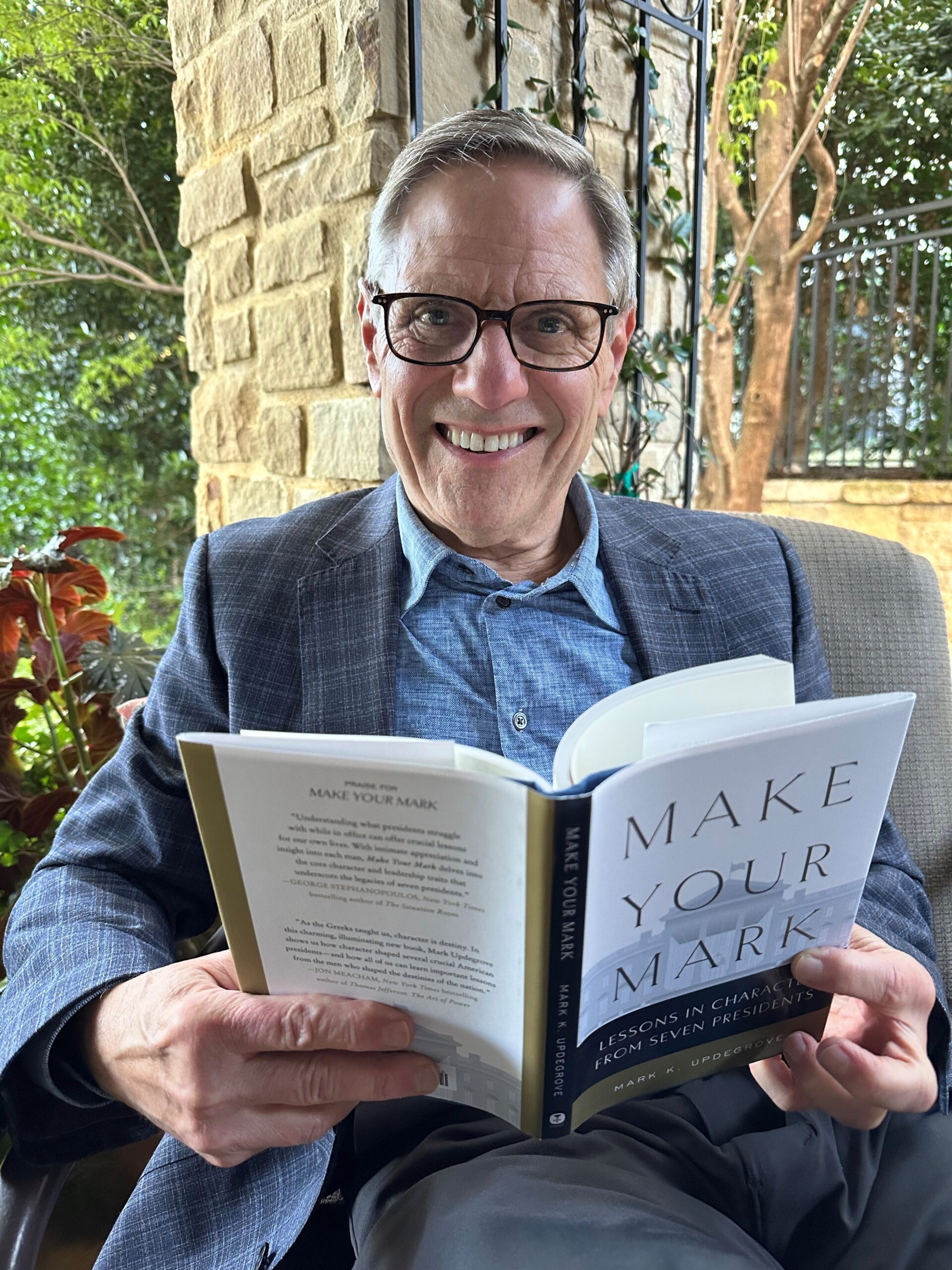
Marvin Blum is inspired by Updegrove’s book to ponder the question: “In one sentence, how did I make my mark?”