
When I started writing this weekly blog five years ago, I never imagined it would evolve into so much personal stuff about Marvin. My plan was to impart estate planning tips to help create a lasting family legacy. My mission is still the same, but the feedback overwhelmingly encourages me to do so by sharing personal stories and experiences. In the parlance of author/educator Brené Brown, I’ve learned to be transparent and “vulnerable.” As Brown puts it: “Vulnerability is not weakness; it is the birthplace of innovation, creativity, and change.” So here I go with another personal revelation that I never would have imagined sharing, but there are some important lessons in it.
As you might guess from the title of this post, this involves a medical situation. I’ll skip to the finish line of the story, so as not to cause any distress. I’ve been through a health saga, but all ended well and I’m completely fine. But along the way, there was a lot of worry (thank goodness, unnecessary worry, which is so often the case). Several months ago, my voice started getting hoarse. I would start out the day fine, but after a workday of talking, my voice was spent. I visited a local ENT doctor who looked at my vocal cords through a scope. He knew something wasn’t right but couldn’t identify it. He prescribed a couple of medications and told me to return in six weeks. I did, and I was worse. He scheduled me for a CT scan and a biopsy. The CT scan looked fine.
Before the biopsy procedure, Laurie went into action. She decided it was time to call in the experts. Through her relentless efforts, within days I was examined by a vocal cord specialist at UT Southwestern Medical Center in Dallas, which has two floors devoted just to vocal cord issues. (Laurie is a sweet kitten on the outside, but trust me, she’s got a tiger in her. She gets her way, but she does it with sugar, not vinegar.) Within minutes, Dr. Kevin Liang (in my eyes, Saint Kevin) identified a spot on the left vocal cord that he suspected was causing the problem. A few days later, Dr. Liang operated on me and removed the spot. In surgery, he could also see a spot on the right vocal cord that wasn’t visible on the scope, which he also removed.
Following surgery, Dr. Liang was very candid. It didn’t look good (in his words, it was very “suspicious” looking). I could read between the lines. He sent the tissue to pathology, and we began the waiting game. For five days, I worked at staying optimistic. It wasn’t easy. I did draw great comfort from my oncologist nephew Dr. Dave Portnoy and his laryngologist brother Dr. Joel Portnoy (Saint Dave and Saint Joel) that even if it was cancer, it was treatable and my voice would return. There were also a lot of prayers going up from me and my loved ones.
Last Monday morning, I got the call from Dr. Liang. Our prayers were answered—“You don’t have cancer!” I was in the late stages of pre-cancer (dysplasia), but we caught it just in time. The hoarse voice was a gift that got me to the doctor. We’ll continue to monitor the area regularly to catch it early if it ever returns. I am overwhelmed with gratitude.
Here are a few takeaways as I process this ordeal:
- When it comes to your health, don’t mess around. Get the best medical care possible, and don’t settle for anything less.
- Thank G-d, I have a very persistent wife who advocated for me and a wonderful support group praying and encouraging me. Mobilize the troops to go into action on your behalf. Don’t fly solo.
- While recovering, my speaking voice will be weak for a while. But thanks to honing my writing skills in this weekly blog, I still have my “voice” through the power of the written word.
- Per advice from psychiatrist friend Dr. Meeta Singh (Saint Meeta), while awaiting news that could be bad, stay on your regular routine and keep busy. And in her golden words: “If you want to talk through any of it or just need someone to listen while you think out loud, I’m right here.”
- Most of what we worry about never ends up happening. Try not to waste precious moments worrying about what might happen. As the very wise Anne Cortell (mother of dear friend Karen Reisman) used to say, “Don’t borrow trouble.” Wait and deal with it if it happens.
- In my efforts to stay courageous, I drew strength from my departed dad Julius Blum. He was fearless. Even when he was diagnosed with pancreatic cancer, his first words were, “I’ve had 76 wonderful years. How can I complain?” He remained upbeat while fighting valiantly for a whole year, making the most of each precious day. What a role model!
- Arthur Brooks’ blog post last week “How to Think About Your Death” sums it up: “I am alive this day, and I will not waste it.” Admonishing us not to “postpone love and happiness,” he clarifies that he’s talking about “love and relationships. For the sake of some future reward, are you neglecting your family life today? Your friendships? Your spiritual development? Envision yourself having just months to live and giving your current self some life advice.”
This medical episode has certainly turned into a teachable moment for me, and I hope it will do that for you too. Building a legacy is a journey, full of ups and downs. And all those “downs” teach us even more than all those “ups.”
Marvin E. Blum
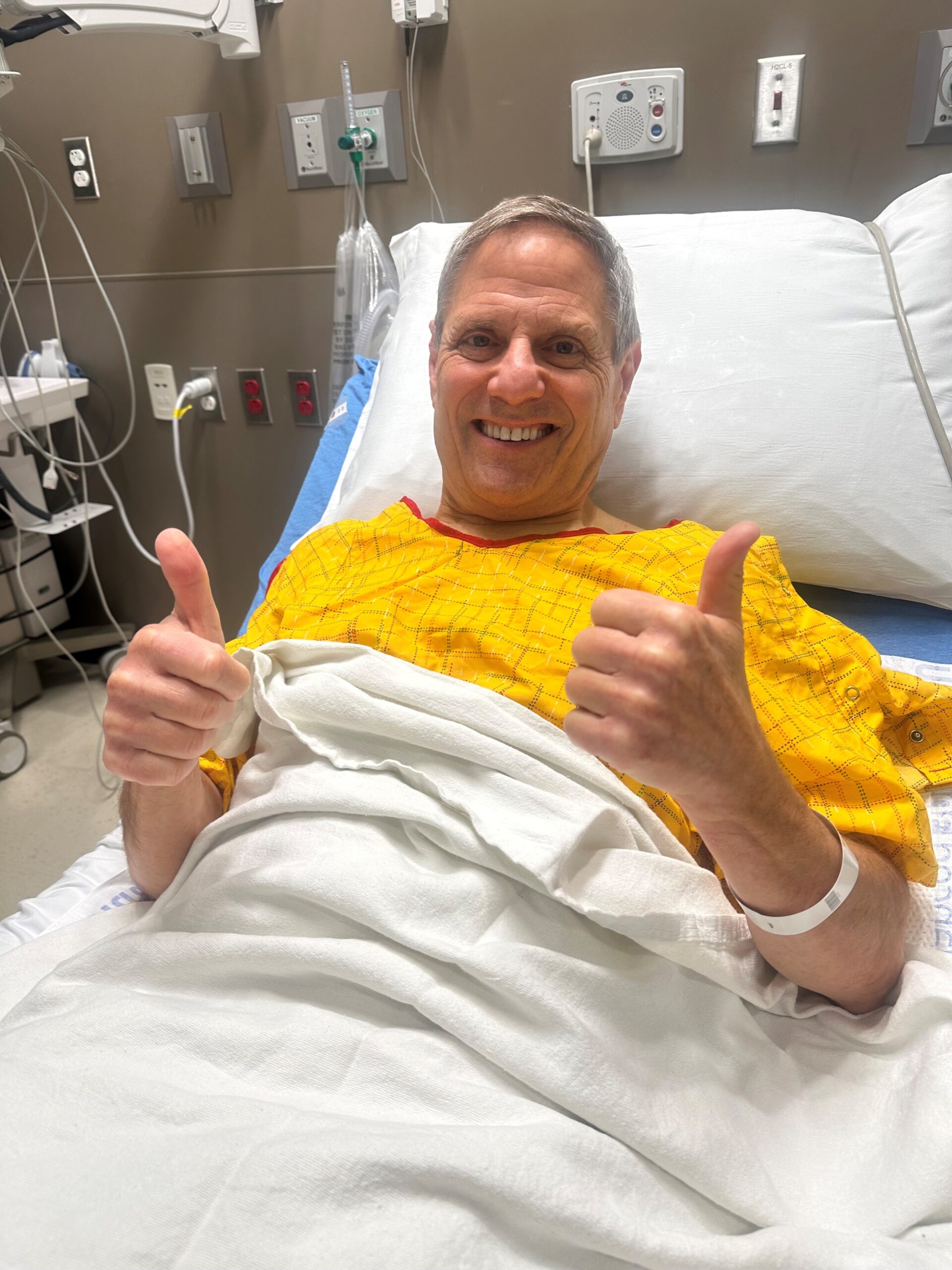
Marvin Blum undergoes surgery and emerges with wonderful news—no cancer, all is well!