
I often write about the giver’s role in passing down a legacy. I encourage parents and grandparents to hold family meetings, share their stories, communicate their wishes, and prepare their heirs legally and emotionally.
But what about the person receiving the legacy? What does it take to be a good heir?
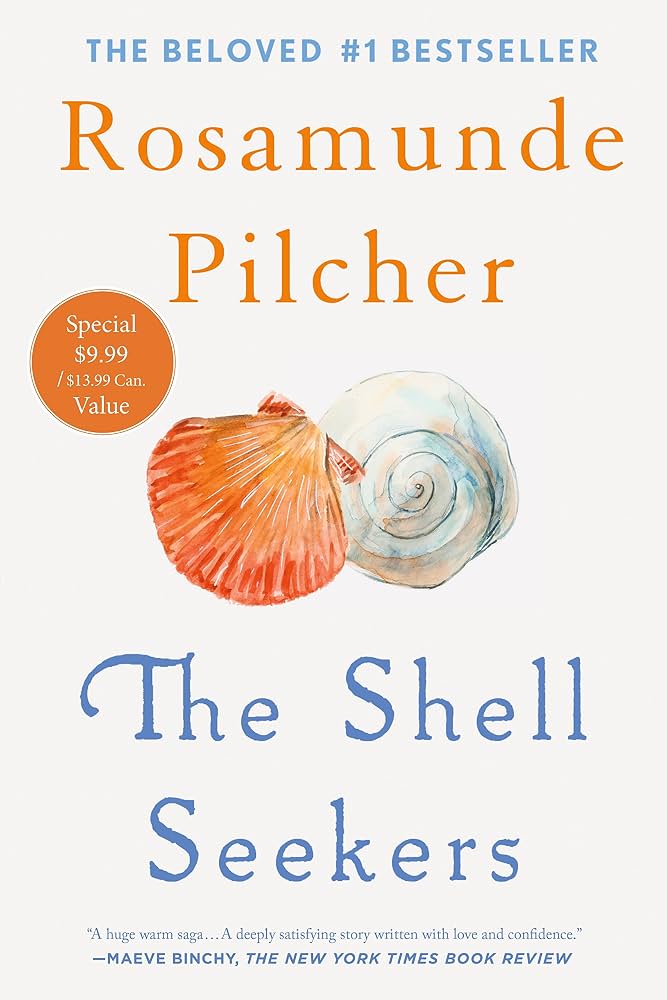
I recently found the answer in an unexpected place—a wonderful novel called The Shell Seekers by Rosamunde Pilcher. Lynn Waller Kelly, a partner at The Blum Firm, recommended it to me. I’m glad she did. It’s beautifully written and offers a powerful lesson about inheritance.
Be warned: spoilers lie ahead.
The story centers on 64-year-old Penelope Keeling and a painting called “The Shell Seekers.” Painted by her father, Lawrence Stern, it depicts Penelope as a child searching for shells on a beach in Cornwall.
For Penelope, the painting is priceless. It represents her parents, her childhood, and the happiest years of her life.
Two of her adult children, Nancy and Noel, see something else: money. As Lawrence Stern’s paintings become increasingly valuable, they pressure Penelope to sell it. In their minds, it’s already part of their future inheritance.
There’s only one problem: Penelope is still very much alive.
An expected inheritance is not an owned inheritance. Penelope can keep the painting, sell it, donate it, or leave it to whomever she chooses. Her children may have expectations, but expectations don’t create ownership.
I see this issue often in estate planning. Children sometimes count on an inheritance long before their parents are gone. It’s important to remember that an inheritance is a gift, not an entitlement.
Nancy and Noel focus on what Penelope’s possessions could do for them, but show little interest in what those possessions mean to her. Penelope’s third child, Olivia, loves her mother and respects her independence. However, she is devoted to her career and, like many of us, assumes there will be more time.
As the story unfolds, we learn that while trapped in an unhappy marriage, Penelope fell in love with Richard Lomax. Though he was not the father of her children, Richard was the great love of her life. They planned to build a future together, but he was killed during World War II. Penelope kept his final letter and photograph hidden for the rest of her life.
Years later, two young people, Antonia and Danus, enter Penelope’s life and fall in love. Penelope sees something of herself and Richard in them. More importantly, they give her something her children too often fail to give her: their time.
They listen to her stories and take an interest in the experiences that made her who she is. A good heir doesn’t just value the inheritance. A good heir values the person leaving it.
Penelope asks each of her children to accompany her to Porthkerris, the Cornish village where she spent her happiest years. All three decline, so she takes Antonia and Danus instead. Together, they revisit the places that shaped her life.
Penelope later donates “The Shell Seekers” to the gallery her father founded in Porthkerris. She returns the painting to the place that inspired it, where its story can live on.
After Penelope dies, her remaining property is divided equally among her three children. However, she leaves treasured earrings to Antonia and her father’s remaining sketches to Danus.
Nancy and Noel are furious, focusing on what they didn’t receive instead of appreciating everything Penelope left them. Olivia defends her mother’s wishes and refuses to let her siblings spoil Penelope’s memory by fighting over the estate.
Danus and Antonia later marry and use Penelope’s gift to begin their future together. She isn’t just passing down money. She’s passing down hope.
After Penelope’s death, Olivia discovers Richard’s photograph and final letter. She finally learns about the great love and heartbreak her mother carried for decades, but she can no longer ask Penelope about it.
That really spoke to me. We all get busy with careers, children, appointments, and the endless demands of life. We assume there will be more time to ask questions.
Don’t wait.
Ask your parents and grandparents about the objects they treasure. Why does that painting hang in a special place? Where did that piece of jewelry come from? Ask about their childhoods, their greatest loves, their hardest losses, and the lessons they hope you’ll carry forward.
Then listen—not because you’re determining what their possessions might someday be worth, but because their stories are worth knowing now.
Nancy and Noel inherit assets but never fully understand their meaning. By giving Penelope their time and attention, Antonia and Danus receive the stories at the foundation of her legacy.
The giver has a responsibility to tell the stories, but the heir has to be willing to listen.
An inheritance may be measured in dollars. A legacy is measured in stories, values, memories, and love.
To be an heir worthy of a legacy, learn the stories while you still have the storyteller.
Marvin E. Blum
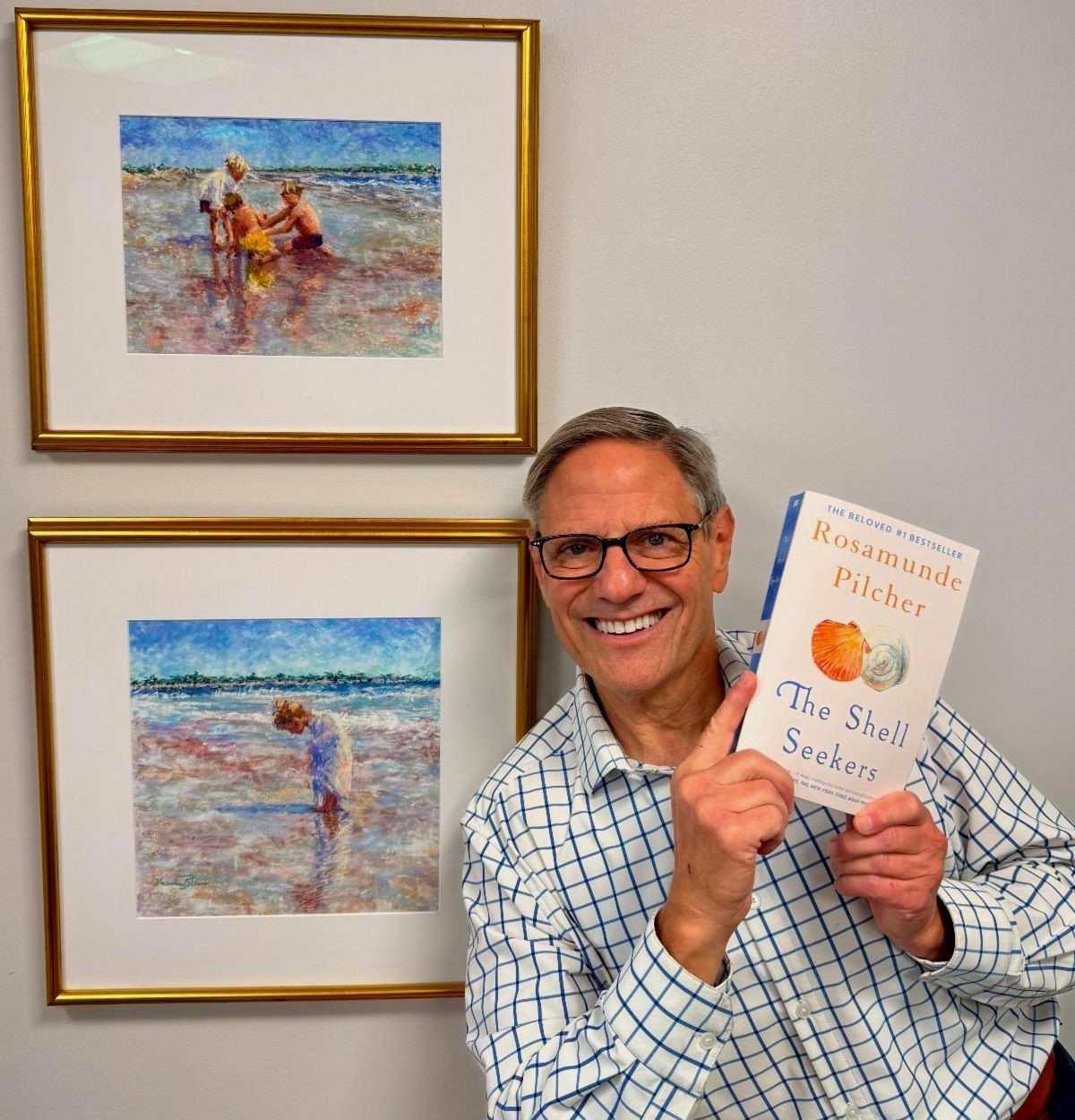
Marvin Blum with two beach paintings that he painted that, by a fitting coincidence, resemble his own version of “The Shell Seekers.”