
Let’s wind the clock back about 50 years to my time at UT Law School. During those three years, I was searching for the field of law that would be my life’s work. I had that “eureka!” moment in an estate planning class taught by Professor Stanley Johanson. I rushed back to my apartment and called my parents to share the news that I wanted to be an estate planning lawyer. My parents’ response: “What’s estate planning?” I embarked on trying to explain to them what estate planning is.
I found myself answering that same question in a recent speech to my synagogue entitled “The Basics of Estate Planning.” I teased that giving that answer in a short speech would be about as challenging as when the sage Hillel was asked to explain the entire Torah while standing on one foot. Hillel basically summed it up by saying “That which is hateful to you, do not do to your neighbor.” I wasn’t quite so eloquent, but I gave it a shot.
When people hear the words “estate planning,” most think, “Oh, you mean a Will.” True, a Will is one part of it, but it’s actually a very small part of a much bigger picture. In my speech, I endeavored to paint a picture of the expansive landscape of estate planning. To do that, I went back to basics and started with an overview of these 10 documents that form the base of many estate plans, creating a foundation to build upon with more sophisticated planning techniques:
- Last Will and Testament
- Power of Attorney
- Medical Power of Attorney
- Directive to Physicians/Living Will
- Declaration of Guardian in the Event of Later Incapacity
- HIPAA Waiver
- Declaration of Guardian of Minor Children
- Statement Regarding Anatomical Gift
- Appointment of Agent to Control Disposition of Remains
- DNR (Do Not Resusciate)
I then expanded on that base by exploring other tools in the estate planner’s toolbox. I took a dive into the world of trusts, hitting the highlights of a few favorites. I started with the Revocable Living Trust (“RLT”), stressing that a Will is a public document while the RLT is private. By converting the Will into a simple “Pourover Will” that pours all the assets into an RLT, you can put all the dispositive provisions in the RLT and prevent the public from seeing them. In addition, by funding assets into an RLT during your life, you can avoid probate at your death.
I pointed out that many people have heavy amounts of wealth in retirement accounts. If you designate a child as beneficiary, those assets become unprotected. Instead, consider naming as beneficiary a Retirement Accumulation Trust for the child’s benefit, protecting the IRA and other retirement assets from the child’s creditors, divorces, and estate tax.
The shopping list of trusts continued: Irrevocable Life Insurance Trust (“ILIT”), Intentionally Defective Grantor Trust (“IDGT”) for your kids, Spousal Lifetime Access Trust (“SLAT”) for your spouse, 678 Trust or Beneficiary Defective Inheritor’s Trust (“BDIT”), Qualified Personal Residence Trust (“QPRT”), Charitable Lead Trust (“CLT”), Charitable Remainder Trust (“CRT”), and Family Advancement Sustainability Trust (“FAST”) to pay for family enrichment like family travel and retreats. I also gave a shout-out to the Family Limited Partnership (“FLP”) to protect assets from creditors and “squeeze” down asset values with valuation discounts.
To review my handout on The Basics of Estate Planning, click on this LINK.
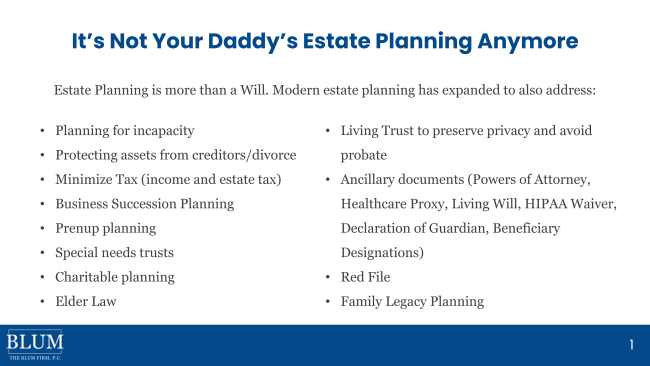
Bottom Line: There’s a lot more to estate planning than a Will. I often reflect on how the world of estate planning has evolved since my days at UT Law School. It’s now a more holistic endeavor, as summarized on this slide “It’s Not Your Daddy’s Estate Planning Anymore.”
Now 50 years later, I could give Julius and Elsie Blum a much better answer to their question “What’s Estate Planning?” I could also explain WHY estate planning was right for me, as it fulfills my need to connect deeply with my clients and help them create a meaningful legacy. It turns out I made the right decision and discovered my life’s true calling on that day long ago in Professor Johanson’s class.
Marvin E. Blum
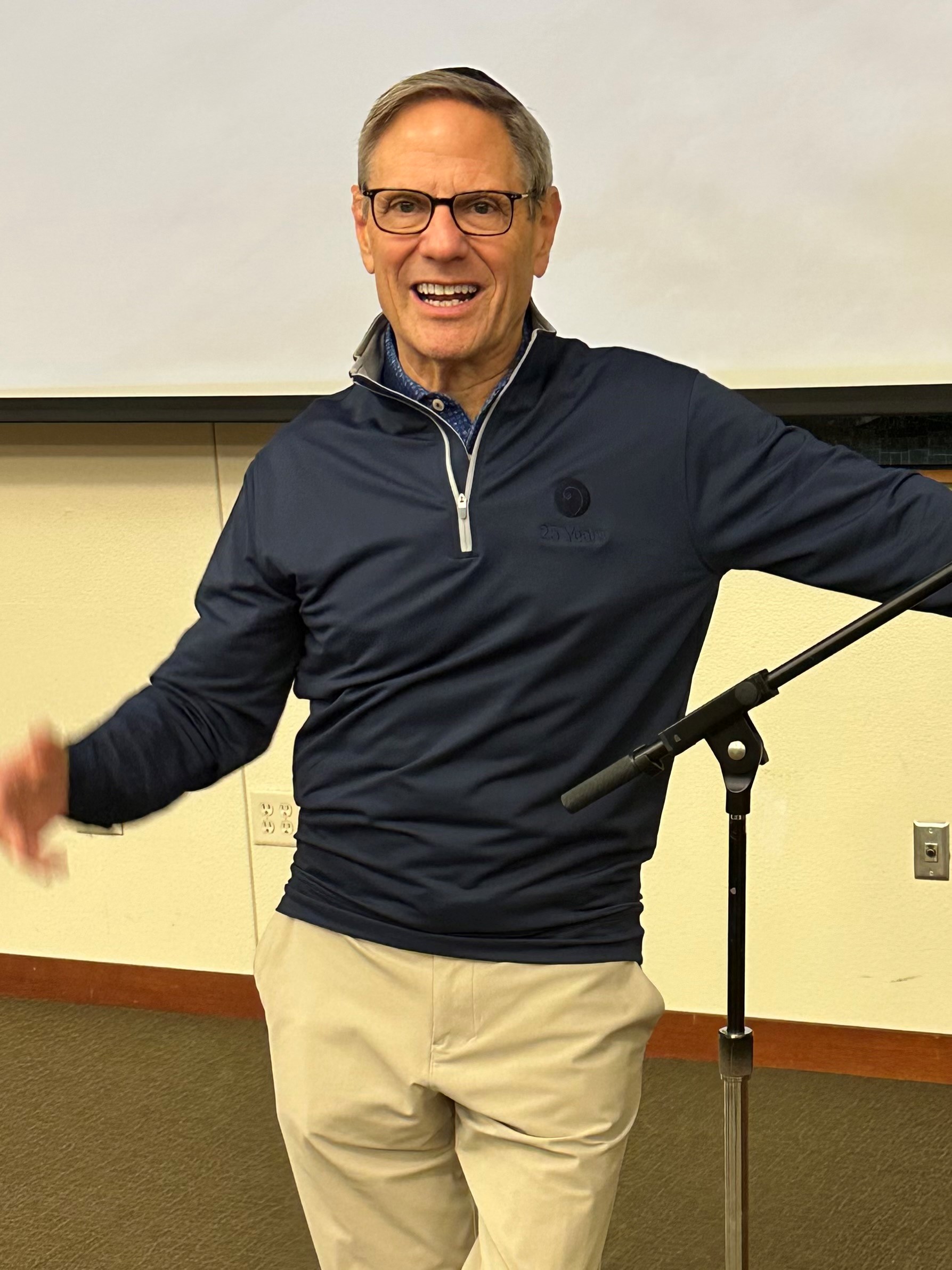
Marvin Blum presenting “The Basics of Estate Planning” at his synagogue, Congregation Ahavath Sholom.
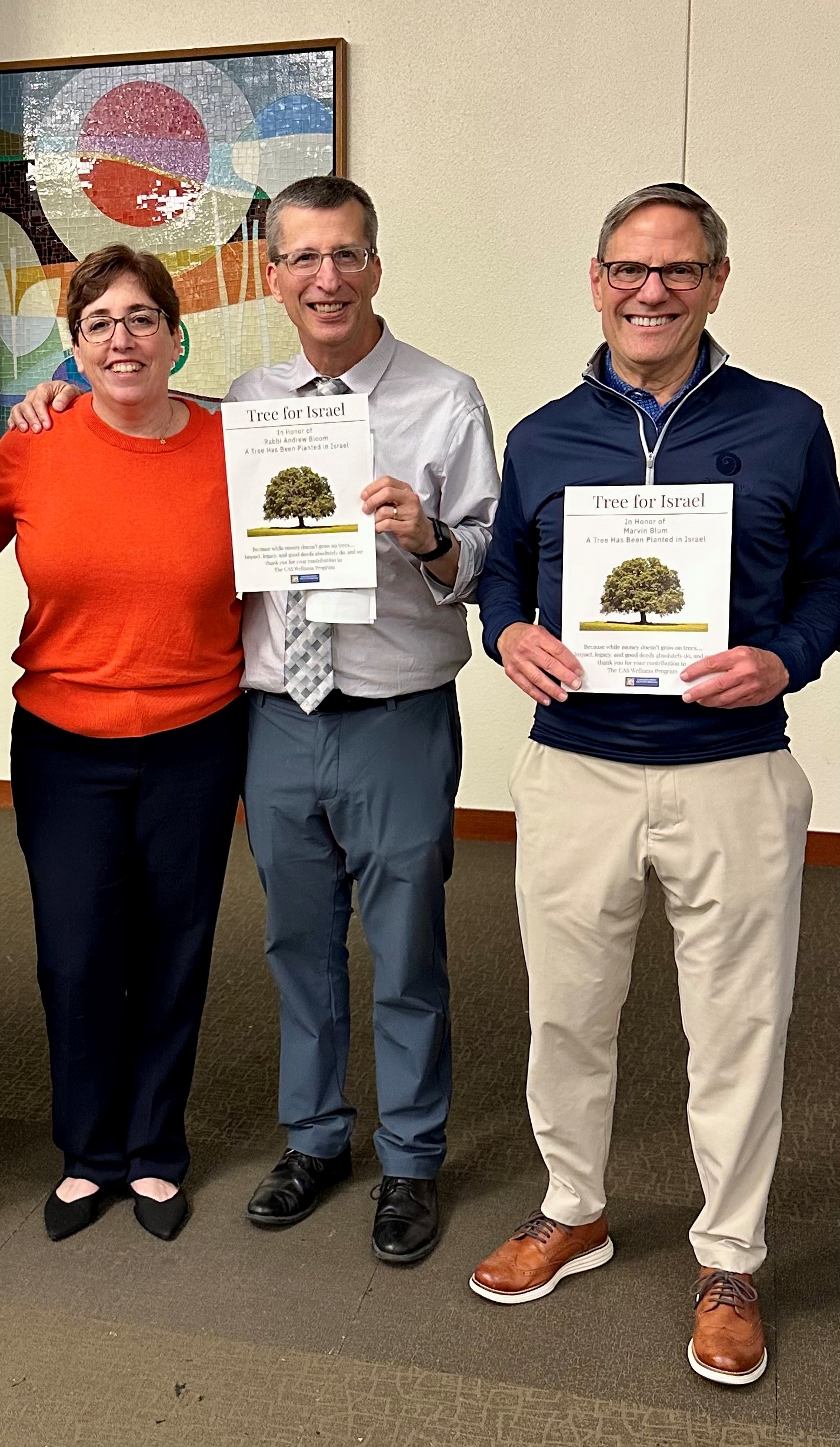
Marvin Blum (right), next to Rabbi Andrew and Miki Bloom, who planted trees in Israel in honor of Blum’s program on planning. The inscription aptly reads, “Because while money doesn’t grow on trees… impact, legacy, and good deeds absolutely do.”