
When I was a new lawyer, I was recruited to teach an estate planning class for a “Money, Money, Money” workshop sponsored by Fort Worth National Bank (now JPMorgan). I hadn’t given a speech since my Bar Mitzvah a dozen years before. The experience was life-changing. I discovered a love for teaching. Although I was fresh out of law school and lacking practical experience, I pulled it off. One of the attendees was my ninth grade English teacher, Ann Walker, who always scared me to death in her classroom. I declared victory when Miss Walker approached me at the end of class with a line I’ll never forget: “The student becomes the teacher.” And the corollary was also true: the teacher becomes the student.
For the next five decades, I embarked on an active schedule of speaking. It’s a calling I embrace. Recently, I put those skills to use at a TIGER 21 conference, co-teaching a workshop on Multi-Generational Estate Planning and also facilitating a roundtable discussion on family legacy. My remarks were different from my first “Money, Money, Money” speech—now less about rules and laws and more about practical lessons from a career of real-world experience. But the highlight for me as the teacher was that I learned from the life lessons of the workshop participants. Once again, the teacher (this time Marvin) became the student.
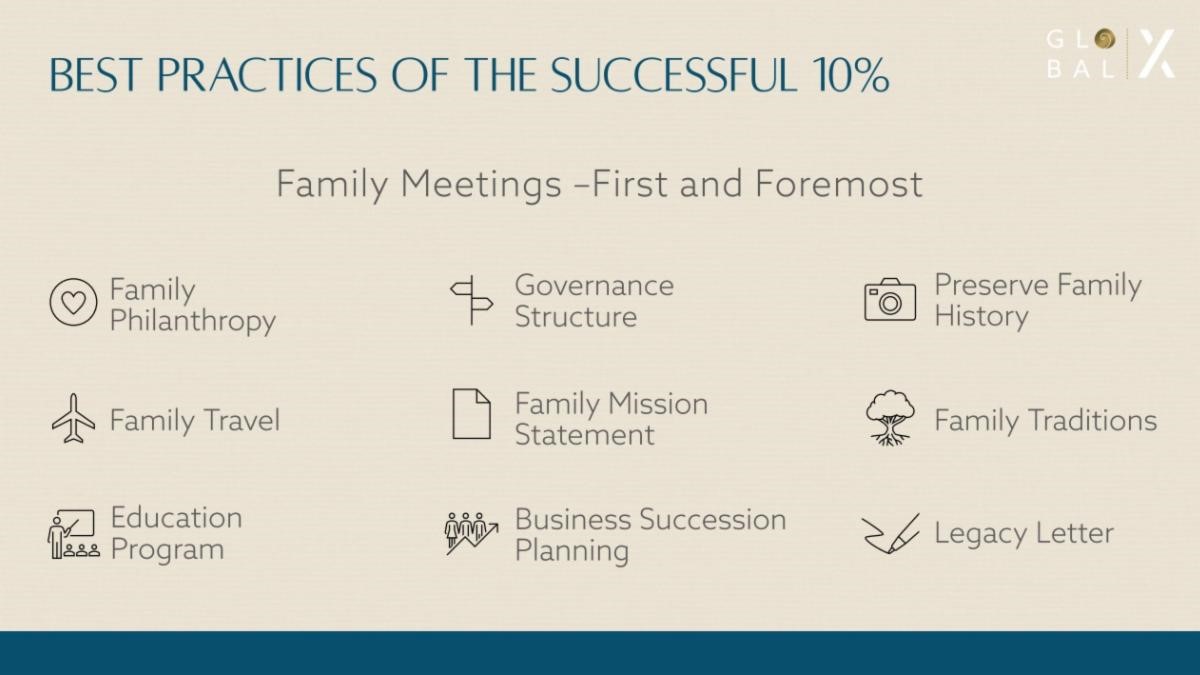
In our presentation, my co-presenters and I gave tips to avoid falling victim to the adage, “shirtsleeves to shirtsleeves in three generations.” The statistics are daunting: 90% of families dissipate their wealth by the end of the third generation. There are no guarantees, but following the best practices of the successful 10% can improve the odds. I covered my Top Ten Best Practices as shown on the slide.
Our discussions included stories addressing other hot topics:
- Effect of wealth on children: “I’m scared of spoiling my children.”
- When should parents share their net worth and estate plan with their kids?
- When should you have a prenup?
- Family businesses- “Succession” issues
- Blended family considerations
- Who should I name as trustee?
But it was in the roundtable discussion when the tables turned. Marvin, the “teacher,” quit talking and asked the “students” to share their family legacy challenges. Get a load of the issues raised:
- At what age should children attend family meetings? Age 12? What if a kid is younger, but gifted, and starts asking questions about wealth at an even earlier age?
- Suggestion for the family meeting agenda: What goals have you achieved over the last year, and what are your goals for the next year?
- The challenges of being an immigrant to the world of wealth: How do you manage the transition? What’s the impact on your relationships with parents, siblings, and friends who don’t have your level of wealth?
- How do you raise kids in affluence and keep them grounded? “You can’t manufacture financial hardship.”
- How do you onboard in-laws into the family? What about your kids’ unmarried domestic partners? Do you include them in family meetings?
- Blended family challenges—kids vs. stepmom; two sets of kids (and the second set is much younger)
- How do you handle a child who expresses anti-wealth views (but still enjoys the amenities of wealth)?
- Family business transition—What if some work in the business and others don’t? When should G-2 take over running the family office from G-1?
- What role does faith play in your family? Philanthropy?
Needless to say, it was a lively discussion. Brainstorming with peers in a facilitated conversation is very enlightening. There were no easy answers, but it yielded lots of good takeaways for all of us, both the students AND the teacher!
Marvin E. Blum

Marvin Blum (right), talking with his hands while presenting an estate planning workshop at a TIGER 21 conference. Input from participants was so valuable that “Marvin, the teacher” became “Marvin, the student.”
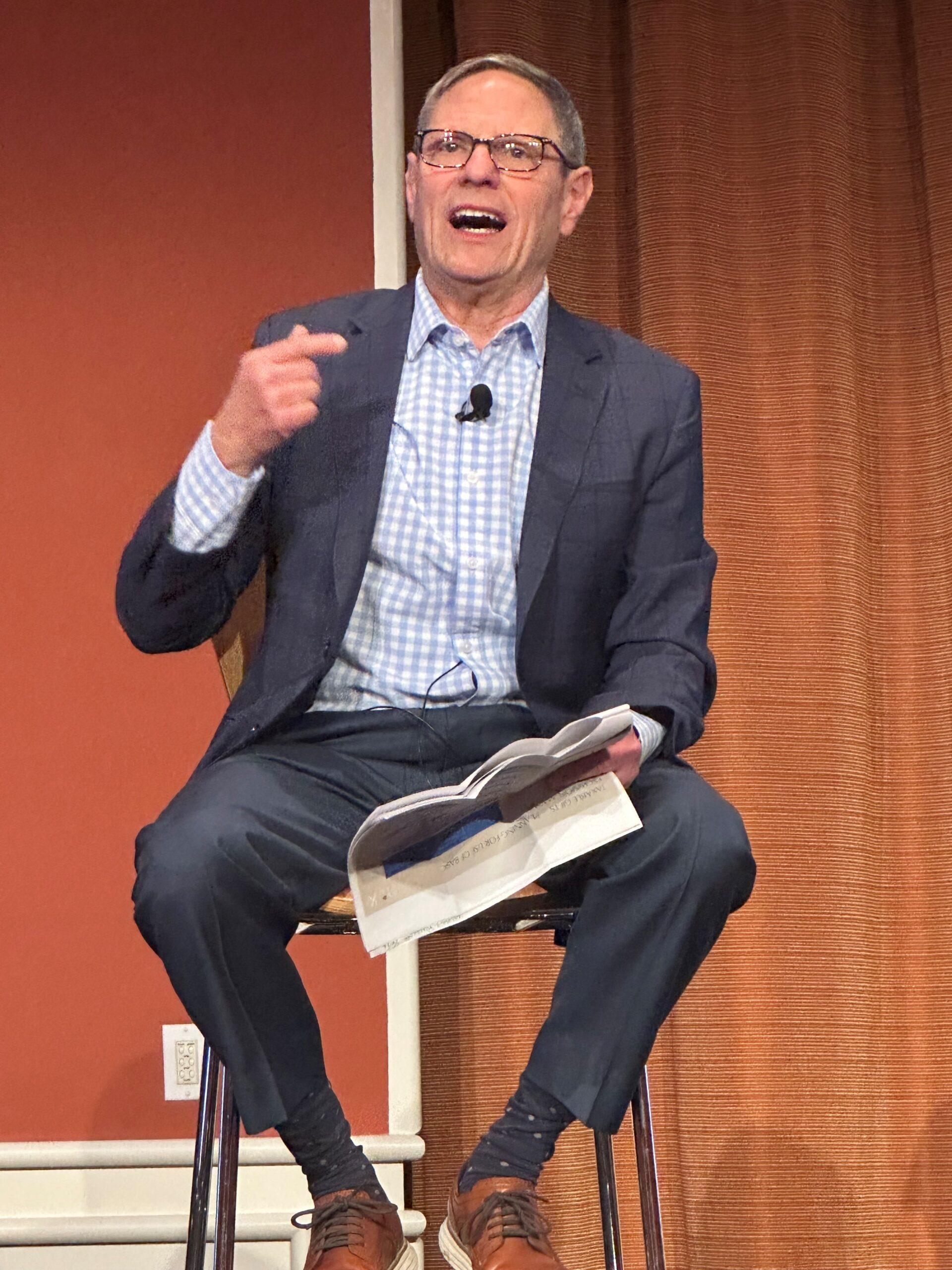
Marvin Blum gets passionate when speaking about family legacy planning.