
No matter how many estates I’ve administered, it’s different when it’s your own family. As I power through my mom’s estate, I’m learning lessons to share with you. Here are tips about disposing of all the “stuff” in the estate, the seemingly endless collection of personal possessions.
As we emptied my mom’s residence, we first identified all the things no one in our family wanted. Instead of having an estate sale for all the unwanted trinkets, we opted to give them away. I learned about estate sales the hard way. We once participated in a neighbor’s yard sale, emptying our attic of many stored “treasures.” Those precious items ended up selling for only a few dollars each. At the end of a blistering hot day, we cleared $77.00, and still took a haul of unsold items to Goodwill. Never again.
We discovered that one man’s trash can be another’s treasure. We gathered all her kitchen items, TVs, clothes, costume jewelry, etc. We called in her friends, caregivers, and service providers to “come and get it.” They gladly took it all. They were happy and so were we.
We did separate her finest wearables and called in her closest friends. It brought us all joy to know that her friends will be sporting Elsie’s finery and remember her when they do. It’s gratifying for those things to now get a new life. Many of those designer items still had tags, as she was “saving” them. (A word of advice—stop saving things and enjoy them now).
That left us with the big furnishings. Figuring out what to keep was a heavy lift. I’m sentimental, so parting with Elsie’s things tugged at my heart. My advice—get an independent voice to help you decide. In our case, we turned to our family’s long-time interior designer Brad Alford. Brad proved to be a godsend.
Brad found a place for my mother’s finest possessions in our home, as well as in our children’s homes and offices. Brad culled through our house and exchanged any of our lesser items for Elsie’s better ones. He infused some of “Elsie” into every room. The end result is spectacular. I could’ve never done it. I would have cluttered up our house with ours and hers, leading to tension with my dear (less sentimental) wife.
One more valuable tip—we identified a few of my mom’s Baccarat crystal treasures from her nightstand. We could live without adding more tchotchkes to our home, so we shared them with three of Elsie’s closest loved ones. As we bestowed each item, we had the gift of telling them how much each of those friends meant to Elsie. Each responded tearfully that it would give them a daily reminder of Elsie. That was a “win-win!”
Remarkably, The Washington Post ran an article on this very topic a few days after my mom died: “‘Throw It All Out’: I Inherited My Parents’ Stuff—and a Painful Decision,” (Katie Roiphe, July 16, 2026). I could’ve written that article. The subtitle really spoke to me, “Mom’s samovar? Dad’s chess set? Things from the past are company, not clutter.” I chuckled, as my mom’s samovar is now in our living room, and I’m searching for a place for the ivory chess set my dad bought in India when stationed there during World War II.
Per Roiphe, “There is a kind of existential dread involved in getting rid of our parents’ things, especially after they die. The act is drenched in symbolism. It asks you to endure another tiny loss on top of the vast loss. It feels like a betrayal not to love something they loved, to cherish something they saved.”
Some items now live in my attic (like the box of love letters my parents wrote to each other during their long-distance courtship between Montgomery and Fort Worth). I know I’m guilty of “curating a family museum,” but I can’t part with them. I agree with Roiphe, “These are not rational thoughts, but it’s so easy for these objects to become an extension of the person, a part of them, in some mysterious, utterly confounding way.”
For me, these “things” are treasures that bring back stories and childhood memories. I know those remnants may only be meaningful to me. When I’m gone, my survivors will hurriedly call 1-800-GOT-JUNK. I’m okay with that, because while I’m still here, I can live in a peaceful state of “dreamy paralysis,” surrounded by memories of my heritage.
Marvin E. Blum
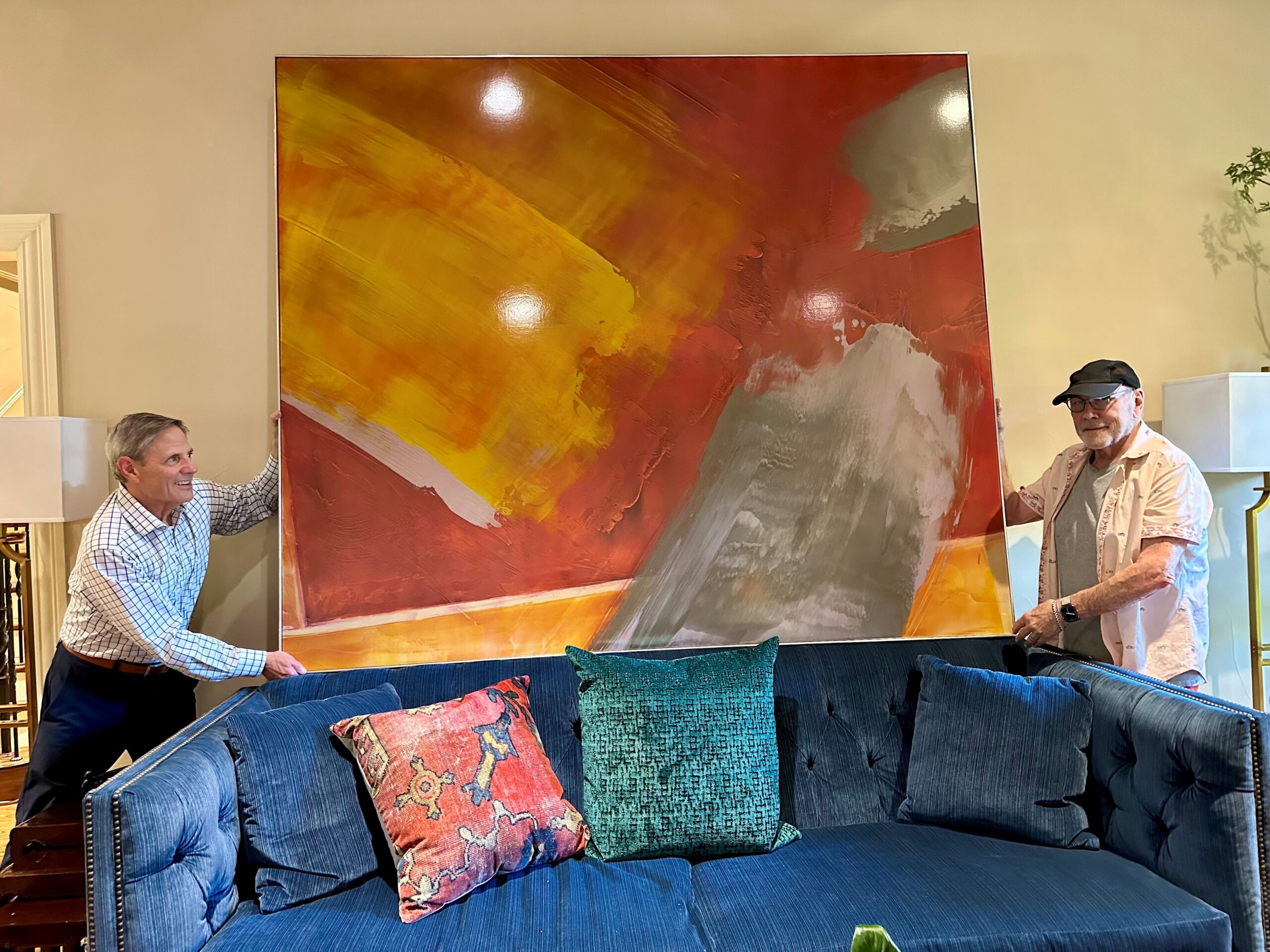
Marvin Blum (left) with interior designer Brad Alford who found a home for his mother Elsie’s superior artwork in the Blum residence, like this Bavinger painting.
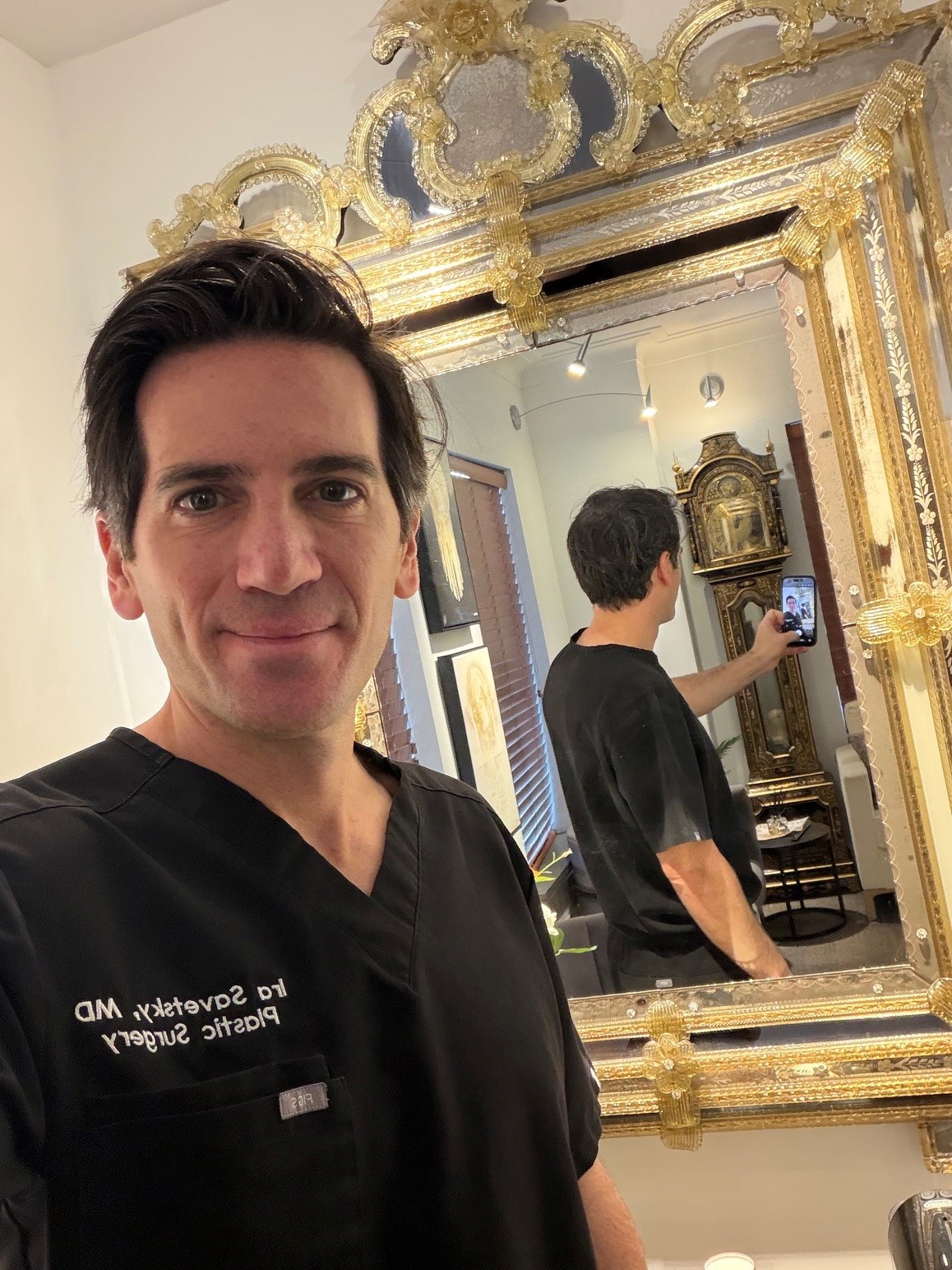
Elsie’s Venetian mirror (and her antique grandfather clock reflected in it) adorn the Manhattan plastic surgery office of Dr. Ira Savetsky, Marvin Blum’s son-in-law.